History Of Us Army Uniforms
Table of Content

The Green uniform will be the everyday service uniform for all Soldiers and the current Army Service Uniform will serve for occasions requiring more formal dress. Currently, the Army and Air Force each have one dress uniform, the Marine Corps has two dress uniforms, and the Navy has three dress uniforms. No. 1 Dress, or "dress blues", is a ceremonial uniform, worn on only the most formal of occasions and by senior staff officers, aides to the Royal Family, and to the personal staff of senior officers in command. It is not generally issued to all units, with the khaki No. 2 Dress functioning as the main parade uniform. One type of frock coat may be worn by officers of lieutenant general and above on formal occasions when not on parade in command of troops. They are a knee-length, dark blue, double-breasted coat with velvet collar and cuffs.
Active Guard Reserve Soldiers who receive a clothing and replacement allowance will be able to use their CRA to purchase AGSU from AAFES. Army National Guard and Troop Program Unit Soldiers will begin receiving uniforms no later than 4QFY21. Uniform recommendations were coordinated with Active Duty, Guard, and Reserve components. The Army Uniform Board, which included an all-female board for the female uniform, provided extensive feedback in designing the female AGSU. A limited user evaluation collected feedback from hundreds of Soldiers, allowing the Army to make enhancements to the uniform. Estimated delivery dates - opens in a new window or tab include seller's handling time, origin ZIP Code, destination ZIP Code and time of acceptance and will depend on shipping service selected and receipt of cleared payment.
Bates Men's High Gloss Durashock Oil Resisting Shoes Size 7.5 W - Black - VGC
No.3 dress is the warm weather equivalent of No.1 dress, worn for specified overseas stations or assignments. With the introduction of No.1 Dress in temperate regions, No. 3 Dress was adopted as the tropical equivalent during the early 1950s. It comprised an all-white cotton drill high-collared tunic, cut in a similar fashion to the No. 1 dress jacket, plus white trousers. No. 3 dress was typically issued temporarily, being withdrawn from units on leaving the station. This order of dress dates back to white drill uniforms worn for "hot-weather" ceremonial and off-duty wear in India prior to World War I.

The tight-fitting and short-skirted double-breasted coatee replaced the single-breasted coat, and the waistcoat was discontinued. Militia wore gray coatees and regulars wore national blue (dark-blue) coatees . Enlisted ranks wore the coatee with a black stovepipe shako, white or gray trousers with matching button-up spats, and black short boots. Changes to the Army structure prompted changes to the uniform regulations. The uniform coatee introduced by the regulations of 1833 was not much different than its predecessors.
No.6: Warm weather parade uniform (bush jacket)
This was worn with a white waistcoat and breeches and black shoes. All ranks wore a black tricorne hat with a black cockade; later a white cockade was inset to represent the American alliance with Bourbon France. The blue Army Service Uniform made its debut at the 2007 State of the Union Address, when General Schoomaker attended the address in it. Officers and Warrant Officers Class One of some regiments and corps wear a leather Sam Browne belt (that of 1st The Queen's Dragoon Guards is of pig skin which is not to be highly polished) or a cross belt. Infantry Warrant Officers Class Two and SNCOs wear a scarlet or crimson sash over the right shoulder to the hip.

Officers have the option of wearing the cap frame with a removable cover made of the same material as the rest of the uniform. Enlisted personnel have a 1/8 inch soutache braid of gold-colored nylon or rayon on each sleeve. The loop is 2 1/2 inches wide at the outside shoulder edge, 1 1/2 inches wide at the inside collar edge, and piped all around with gold-colored nylon or rayon cord edge braid, 1/8 inch wide. The braid is inserted in the joining seams so it is completely visible around each loop.
Special ceremonial units
The traditions of the United States Army, including its uniform and accoutrements, are rooted in the British Army of the 18th century. Clothing of this period was characterized by tightly fitted smallclothes and coats with tight-fitted sleeves. Generally speaking, each soldier received a uniform consisting of a wool regimental coat with linen smallclothes in the spring, and a wool regimental coat with woolen smallclothes in the fall.
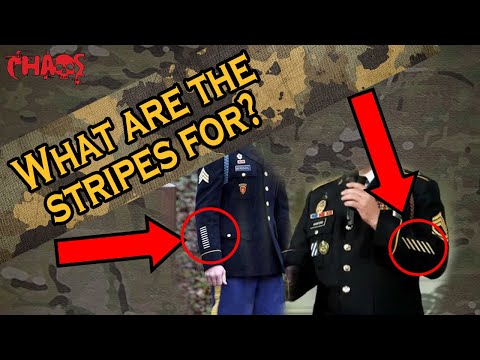
The Tam O'Shanter is also worn by some UOTCs and Army Reserve units in Scotland. There had been an Other Ranks pattern of warm weather Service Dress, but this fell out of use after the 1950s. General officer's full dress, as worn by Edward Smyth-Osborne (Major-General commanding the Household Division). Other non-band SCU units with distinctive uniforms include 54th Massachusetts Volunteer Infantry. The stripes are sold by quantity you select and come connected.
The 1st Cavalry Division's Horse Detachment was given status as a Special Ceremonial Unit in 1972. Their parade uniform consists of a navy "fireman's shirt", worn with Columbia blue trousers with yellow piping. Accoutrements include a divisional kerchief worn around the neck and yellow suspenders.

The military all-weather coat is nice for everyday wear. The band is grosgrain silk of the first-named color of the officer’s basic branch, with a band of 1/2 inch, two-vellum gold, synthetic metallic gold, or gold-colored nylon or rayon braid, placed at the top and bottom of the hatband. If the officer’s branch has two colors, 1/8-inch piping of the second color is placed on the inside edges of the gold braid.


Comments
Post a Comment